
Airline Seat Reservation Fees: When to Pay and When to Skip

5 min read
In this article
Airline seat reservation fees are optional charges for choosing a specific seat before check-in. They are worth paying when traveling with someone, on a long flight, or in Basic Economy without free assignment. Otherwise, skip them and pick a free seat at check-in or let the airline assign one.
The situation: what airlines actually charge for seat selection
There is no single airline seat selection fee that applies everywhere. The cost depends on the airline, the fare type, and the kind of seat you choose. A standard aisle or window seat may be free in one fare and cost extra in another. Preferred seats closer to the front and extra-legroom seats usually carry a fee even when standard assignment is free. Before you book, check the rules for your airline or fare type because booking paths show the price before you pay.
A few policies explain most of what you will see:
- Southwest uses open seating and does not charge for a standard seat. Passengers board in groups and choose any available seat, a policy the airline details on its site without a seat selection fee.
- Many Basic Economy fares do not include free advance seat selection. You can skip the fee and wait for check-in, but you may not sit with your travel companion.
- Preferred seats and extra-legroom seats are usually paid options even when a regular seat assignment is free.
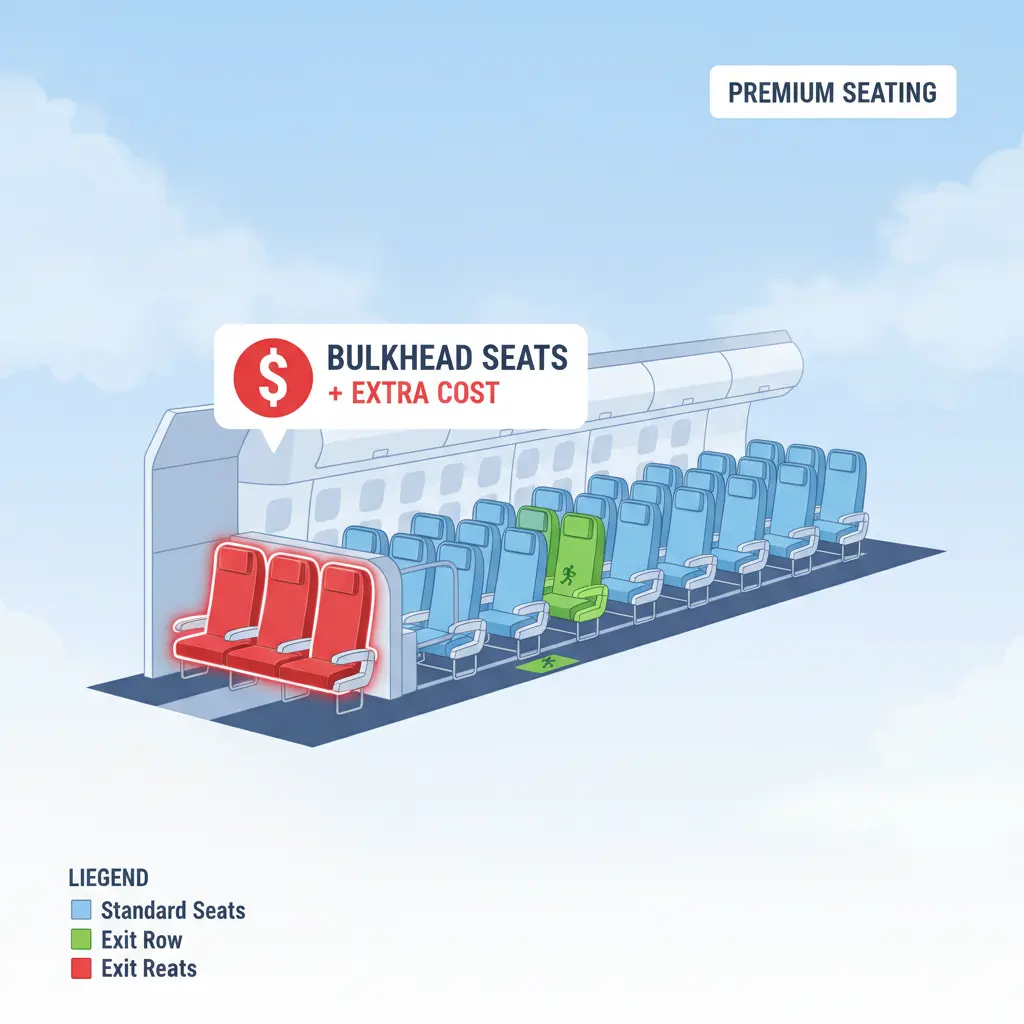
Before you pay, look at the seat map in the booking path. Icons usually separate free standard seats, preferred seats near the front, and exit-row or extra-legroom seats. The price appears next to the seat, not as a separate fee after checkout, because U.S. rules require airlines to show optional charges before payment.
The U.S. Department of Transportation Fly Rights page explains that airlines must disclose optional fees clearly during the purchase process. The department's Air Travel Consumer Reports also track seat selection fees among ancillary charges. That shows how common these fees have become across carriers. The seat map should show which seats are free and which carry a charge before you enter your payment details.
What to do: when to pay and when to wait
Airline seat reservation fees should be a decision, not a default. A simple way to answer when to pay for seat selection is to check three things: how long the flight is, who is traveling with you, and what your fare or status already includes. Use the table below as a decision guide.
| Situation | Pay | Don't pay | What to do |
|---|---|---|---|
| Solo trip under 4 hours | Rarely | Usually | Wait for free check-in assignment; if you want to exit quickly, check the seat map but don't pay unless a particular seat matters. |
| Couple or group | Often | Only if you accept being split | Pay for seats together if sitting apart would cause stress; otherwise wait and ask at check-in. |
| Long international flight | Sometimes | If you can manage any seat | Pay for an aisle or extra-legroom seat if sleep or stretching matters; check the price before you confirm. |
| Basic Economy fare | Only if sitting together or a specific seat is essential | Usually | Skip the fee and accept the assigned seat; if you need certainty, pay before seats fill. |
| Elite status or airline credit card | Rarely | Usually | Check your benefits first: many status tiers include free preferred seats or discounted fees. |
Do not treat the fee as a signal that a seat is better. The seat map shows what you are buying: location, extra legroom, or being near the front. For budget trips, seat fees are part of the hidden low-cost airline costs to watch before you book, along with baggage and change fees. If you are planning a solo trip in five steps, you can decide the seat question at the booking step and move the saved money toward a meal or an extra night. For solo travelers, safety and comfort can also guide your seat choice, so check the safest solo destinations before you choose. The key is to make the choice before the seat map disappears, not during check-in when only middle seats remain. For a solo traveler on a short flight, saving the fee and taking a random seat is often the better trade. For a couple with a tight connection or a long overnight flight, paying removes a small uncertainty.
What to avoid: extra fees that do not buy a better seat
Do you have to pay to choose a seat? No, not on every fare and not on every airline. The mistake is paying before you know that. Watch for these avoidable moves:
- Paying too early on a fare that already includes free seat selection. Check your fare rules before the booking page, not after.
- Confusing a preferred seat with an extra-legroom seat. A seat near the front is usually not a bigger seat; extra legroom is a separate category with its own price.
- Skipping the free option at check-in. Many airlines release unassigned seats at no charge when check-in opens, so set a reminder and look then.
- Assuming a couple will automatically sit together. If sitting apart is not acceptable, pay at booking or confirm the airline's family seating policy.
- Paying for a preferred seat without checking whether it is just a row or two ahead. If there is no extra space, the difference is minor.
- Waiting until the last minute to ask about free seats. The airline may have released the better free options earlier.
To stretch your travel budget, treat seat fees as one small line item and compare it against the actual annoyance of an unwanted seat.
If it goes wrong: seat changed or fee charged incorrectly
Seat assignments can change when aircraft change or when a fare is rebooked. A fee can also appear even though your fare or status should have included a free seat. Take these steps in order:
- Check your fare rules and receipt first. Confirm what the airline said was included when you booked.
- Contact the airline through the app or by phone and ask for a correction or a refund of the fee.
- Keep a screenshot of the seat map, the fee, and the fare rules before you contact them; that record is one of the smart travel safety habits that helps when plans shift.
- If the airline does not resolve it, consult the U.S. Department of Transportation Fly Rights page for your rights and the correct complaint path.
Keep the confirmation email and note the date, flight number, and seat you selected. DOT staff work with airlines on many complaints, but you should first try the airline's complaint channel. For the official rules and complaint options, see the U.S. Department of Transportation Fly Rights page.

Keep reading